Monday, May 27, 2013

Elephant Race Festival, Dak Lak


If you have a chance to Dak Lak Province in springtime, you should not miss the Elephant Race Festival, normally celebrated in the third lunar month. Attending the festival, you will be lived in the boisterous atmosphere of the echo of gongs and the spectacular performances of the elephants from the Central Highlands forest.
The Elephant Race Festival in Dak LakThe Elephant Race Festival is usually held in Don Village or in forests near the Sevepoi River. In preparation for the festive day, people take their elephants to places where they can eat their fill. Apart from grass their food also includes bananas, papayas, sugar canes, corns,sweet potatoes. The elephants are free from hard work to preserve their strength. On the big day, elephants from different villages gather at Don Village. The race track is on even ground, preferably wide enough for ten elephants to stand simultaneously in a line with a length of one to two kilometres. People from near and far in their best and colourful costumes flock to the festival.
With the signal of of tu va (horns made into musical instruments), the mahouts command their elephants to go to the race track, standing in a row at the starting point. The leading elephant stands in front, whirling his trunk and nodding his head in greeting the spectators. Atop each elephant there are two handlers in traditional costumes for generals. The tu va signals the start of the race and the elephants rush ahead, excited by the sound of the drums,gongs, and cheering from the spectators. Upon seeing the first elephant dashing to the destination, the spectators shout boisterously amidstthe echoing sound of drums and gongs. At the end of the race, the winning elephants lift their trunks above their heads to wave to the viewers, walk deliberately flapping their ears gently, gazing through half-closed eyes to receive sugarcane from their viewers.
The winning elephant is given a laurel wreath. Like its owner, the elephant expresses its happiness and enjoy the sugar canes and bananas from the festival-goers. After this race, the elephants participate in the competition of swimming across the Serepok River, of tug-of-wars,or throwing balls and playing football. When the race comes to an end,the competing elephants bring back the atmosphere of the festival to their villages. Upon returning to their village, they receive warm welcome from the villagers. Very often, the elephants from Don Villagew in the prizes as the village has a tradition of training and tending elephants.
The elephant race is the biggest festival in the Central Highlands. Coming here, you will not only feel the martial spirit of the M'nong ethnic people, who are very famous for their bravery and skill in hunting wild elephants, but also the magnificent landscape of the Central Highlands which further stresses the grandiose characters of this traditional festival.

7 days Cambodia - Thailand tour (from Ho Chi Minh) with RAC Travel

RAKSMEY ANGKOR CORPORATION (RAC Travel) is one of the most affordable travel agency in Vietnam, offer attractive, safety and convenient tourism products for all visitors via local and international travel programs. Here is a tour travel from Ho Chi Minh to Cambodia and Thailand, is the best choice for guests.


Day 1: Ho Chi Minh City – Phnom Penh
05h00, RAC Travel guider pick up guests and arrival Phnom Penh. At Phnom Penh, have lunch, check in hotel. Afternoon, tourists can visit Phnom Penh city: Royal Palace, Golden Pagoda, Silver Pagoda, Independence tower, Vietnam volunteer soldier monument. End of the tour, overnight at hotel.
Day 2: Phnom Penh – Battambang – Bangkok
06h00 have breakfast at the hotel and check out. And go to Bangkok via Poipet border. Make entry and exit procedure. Continue to depart Bangkok. Check in hotel. Have dinner. Explore Bangkok at night.
Day 3: Bangkok – Pattaya
06h00 have breakfast at the hotel and check out. Car company takes tourists to visit Golden Buddha Pagoda, Grand Palace, Wat Po – the largest and most ancient temple in Bangkok. You have lunch. And then arrival Pattaya, tourists visit and shop at Trại Rắn and Yến Sào nuture and performing center. Check in hotel and have dinner. In the evening, you can enjoy the art program with the most modern and elegant stage (Tiffany Show stage) in Thailand. Rest at hotel.
Day 4: Pattaya
Have breakfast and then arrival Coral island by speedboat. Guests are free to swim, play games: skydiving, jet-ski, scuba diving…(self-expense). Have lunch at the mainland. Afternoon, car company pick up guests go to visit the largest Jewelry center of Thailand. At Nong Nooch cultural national village, visitors could see Festival of Thai culture and Elephant show, watch orchid garden, pottery artificial garden. Continue visit Khao Chee-Chan. Have dinner and rest at hotel.
Day 5: Pattaya – Poipet – Siem Reap
Have breakfast at the hotel. Check out. Pick up guests to arrival Siem Reap via Poipet border. Make entry and exit procedure. Have lunch at Sisophone. Continue to go Siem Reap. Have dinner and rest at hotel.
Day 6: Siem Reap
Morning, visit Angkor Wat temple area, one of wonders in the world, see Angkor Thom status, contemplate Aêngkor architecture, visit the ancient Royal Palace of Yavaraman VII king, Elephant Fighting Square – where to organized the tradition festival of ancient Khmer
12h00 have lunch. Afternoon, visit Banteay Kdey, Takeo temples, espeically, Taprohm temple – where plays an important role of Cambodia.17h00 Climb Mount Bakheng to enjoy sunset, see Barây lake, Siem Reap airport.
18h00, have buffet and enjoy charming Apsara dance. Rest at hotel.
Day 7: Siem Reap – Ho Chi Minh city
06h00 have breakfast at hotel. Check out. Come back to Ho Chi Minh via Bavet border. Have lunch at KomPongCham. Continue to go Ho Chi Minh. Make entry and exit procedures.
18h00, at Ho Chi Minh city. End of the tour.
Tour price
>12 years old : VND 8,700,000
< 12 years old: VND 6,560,000
< 2 years old: VND 950,000.
For more details, please contact: Cellphone : ( 084 ) 0938569108 / (855) 097 9041289. Email: ractravel@yahoo.com or :jimmytravel10@yahoo.com

Tips for going to sea

Being immersed in cool sea water, leisurely taking a stroll in smooth white sands or contemplating clear blue sky are interesting things you can do as going to beautiful beaches in the summer.


Location
Your trip will be safer and happier as you always have at least a partner to take care for each other and share happy moments. When you want to swim, you need to tell your friends. They are likely to be the quickest rescuer for you in case of emergency.

You should not walk barefoot in rocky beaches. Moreover, swimming too far from the seashore is not a good ideal.

More importantly, you should choose safe and clean beaches to freely play with sea waves or jump on sand.

Luggage
Flip-flops, sandals, wide-brimmed hats and colourful costumes are necessary items you should bring.

You should tie your hair with colorful headband to limit the amount of hair that's exposed to direct sunlight.

Do not forget to bring fashionable sunglasses to protect your eyes from the sun, wind and sand. Sunscreen with SPF45 is always in the top priority to reduce your risk of skin damage and skin cancer.

Bringing a wide-brimmed hat is useful because hats provide excellent coverage.

Food
Activities on the beach like swimming, volleyball, etc will lose your power. Therefore, you need bring food like bread, water, sweet cake, fresh fruit so you can enjoy them after being tired or hungry.

Make-up
As travelling, too much make-up will not be suitable and necessary. Natural make-up is better. You just need tinted moisturize for your face and sun lipstick for your lips. Using glossy lipstick also make your lips attractive and plump.

Besides, you have to use suncream all day so you can use pink or coral pink blush to make you look natural in the sunshine.

Bikini
Choosing a right swimsuit for your body is not easy.
If you are not confident with you body, do not worry about it. Bikini is now very various with many sizes and styles designed to fit body shapes, different personalities and help you hide your body’s weakness. To be more prominent, you can choose an eye-catching bikini with floral prints, polka dots.
Souvenir
After a trip, souvenir will be interesting gifts for your friends and family. There are many things for you to choose such as sedge hat, chain ring screws petite, flowers made ​​of sea shells, etc. 
Translated by Nguyen Quynh

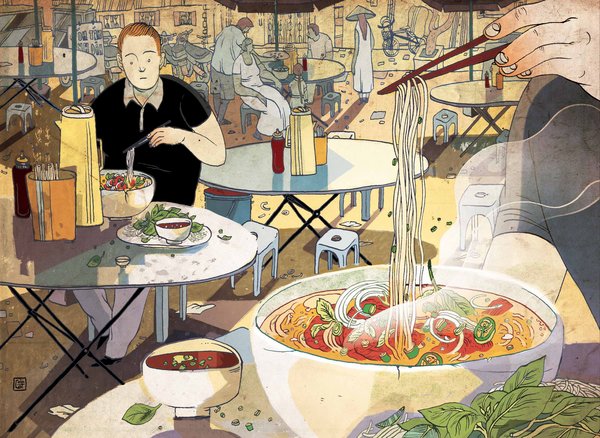
Learning to love ‘the people’s food’ in Ho Chi Minh City

In the summer of 1996, fresh out of college, I moved to Ho Chi Minh City for one simple reason: I loved Vietnamese food.


At restaurants in Virginia, Maryland and Washington, I’d grown fond of the staples of the cuisine — grilled meats, startling herbs, crunchy vegetables — and particularly of pho, the aromatic beef noodle soup that is Vietnam’s national dish. As graduation approached, I knew I wanted to live overseas, and Communist Vietnam, which had just opened its doors to the West, was the obvious choice. In fact, it didn’t even feel like a choice at all — it felt like destiny.

But as I quickly discovered, liking a cuisine is not the same as understanding it. My first sense of this disjunction came a couple of weeks into my stay, when I settled in for lunch at a downtown restaurant. The manic energy of the streets — the flood of motorbikes, the clanging construction crews, the gawking tourists — had dissipated in the midday heat. Time to eat, and nap and breathe and think, away from the tropical sun.

This respite is likely the only reason that I happened to notice the man with the gun. He was across the street, standing in the clear sunshine. He was Vietnamese, in his early 40s. He wore sunglasses. And at his side, he held what I assumed was an Uzi. Then he disappeared into a storefront. If the street had been full of 100cc Hondas, as it had been an hour earlier, I would’ve missed him entirely.

It was an odd sight, and I wanted to ask someone — anyone — about it. Was the man a gangster? A cop? Then my food arrived, and I forgot all about him. I hadn’t known what to order, but something on the menu caught my attention: luon nuong mia, freshwater eel wrapped around sugarcane (held in place with a chive bow) and grilled over charcoal. As I bit, I fell in love. The eel was rich and oily, caramelized from the charcoal heat, infused with the tang of garlic and fish sauce and the sweetness of raw cane. And the cane itself, when I gnawed it, released a burst of sugary juice tinged with the meaty slick of the eel.

This, I knew, was what I couldn’t get back home. This was why I’d picked up stakes and moved toVietnam. The eel was so great that I wanted to turn to my neighbors and tell them that it justified everything.

But I had no neighbors. I was alone in this restaurant — alone and confused. After all, this seemed to be a quality spot; the eel was proof. So where was everyone? What was I doing wrong?

Those first months in Vietnam were full of such confusion. All around me, I was fairly sure, were amazing food experiences waiting to be had, yet I couldn’t figure out what to eat, how to order, and where, and when, and why. At lunch, for example, I’d often order pho at the renowned Pho Hoa Pasteur. But when I told my students in my English classes, they looked confused. To them, pho was breakfast, not a midday meal. I’d protest: Plenty of Vietnamese people were at Pho Hoa Pasteur! My students would backtrack, perhaps wanting not to contradict their teacher, or just to make me feel comfortable. Oh, sure, they’d say, you can eat any food anytime you want. Khong sao — no problem.

But it was a problem. And I knew its roots. At Vietnamese restaurants in America, all kinds of foods are served together — noodles, soups, stir-frys, spring rolls. But in Vietnam, restaurants are often devoted to a single dish: pho, banh xeo (a rice crepe stuffed with pork and bean sprouts), goat hot pot. Adapting to this was hard. Knowing only a small subset of dishes, and only a few words of Vietnamese, I didn’t even know what to commit myself to. I knew that I should just blindly walk in, point to whatever I saw on other tables, and enjoy the result, but fear and shyness kept me at bay. Is there anything more alienating than not knowing how to eat?

Too often I wound up at the non-Vietnamese restaurants in the backpacker and tourist districts. They were often good: excellent Italian fare, thanks in part to fresh tomatoes and basil; a devoted expatriate clientele demanded serious Japanese; and a century of French colonialism meant that pâté, red wine and onion soup were vernacular dishes. But these meals all reminded me of my ongoing failure to penetrate Vietnamese culture.

After a few months, I moved from my sixth-floor rented room to another on the fifth floor. The new room was larger and air-conditioned, but I took it for the simple reason that it had a tiled patio that was ideal for takeout alfresco lunches.

But what to bring home? Ham-and-brie sandwiches? Thai ground pork with holy basil? On a stroll down nearby Bui Vien Street one day, I spotted a man grilling pork chops outside a com binh dan, an institution that translates as “the people’s food.” Com binh dan are everywhere in Vietnam. For less than a dollar, you can have a plate of rice and a serving of, say, pork belly braised in fish sauce and sugar, water spinach (rau muong) stir-fried with garlic, or a soup of bitter melon stuffed with pork and mushrooms.

But com binh dan had never appealed to me. Maybe their folding tables, plastic chairs and worn silverware looked too shabby. Maybe the pre-made dishes, sitting in the humid open air, turned me off. Maybe I needed to read a menu. Or maybe I was just afraid. My palate could handle a challenge, my fragile psyche couldn’t.

When I smelled the suon nuong, or pork chops, however, everything changed. Marinated in garlic, sugar, fish sauce and shallots, they gave off an intense aroma of fat and caramelization, one I couldn’t turn away from. So I ordered to-go — suon nuong on a mound of rice, with rau muong and sliced cucumbers — and carried the plastic foam box to my fifth-floor oasis, where I ate in utter bliss.

The com binh dan around the corner quickly became my go-to spot for good, unpretentious food. Usually, I’d get the perfect suon nuong, but the shop also had squid, stuffed with pork and braised until soft, as well as crispy-fried fish. And a fried egg could be added to anything.

Eating on my patio was nice, but more and more I ate at the com binh dan’s flimsy tables, noticing how other customers ate — with chopsticks, with fork and spoon, or with a combination. I studied the way they prepared dipping sauces, either by filling dishes with dark fish sauce and a few shreds of red chiles, or by pouring nuoc cham, a mix of fish sauce, water, lime juice and sugar, from the plastic pitchers placed on each table. (I’d thought it was iced tea — whoops!) People ate without much ceremony. This was good cooking, but it was also a refueling stop. As I watched and copied them, day after day, I didn’t even realize that, for the first time, I was eating like a regular person.

Nor did I realize that mastering this one meal would have collateral effects. Now that I’d locked down lunch, I could eat breakfast and dinner however I wanted. No longer did I have to feel guilty about starting the day with black coffee and fresh croissants; in a few hours, I’d be feasting on pork chops.

I could also experiment at dinner, testing dosas at the new South Indian restaurant, partying with friends in the Siberian Hunting Lodge, or feasting on braised snails and grilled mussels in a converted auto garage near the Saigon River. Whether these meals turned out delicious or dull, authentic or artificial, I knew that the next day I’d be eating a people’s lunch.

There was, however, one casualty of my growing cultural adeptness. Now that I better understood lunch, the restaurant that served sugarcane eel no longer fit into my eating life — by then I knew it was not a lunch spot, and come dinnertime there was so much else to explore. I never returned. The luon nuong mia, so fixed in my memory, seems like a heat-induced hallucination, almost as illusory as the man with the Uzi. Except it was all real, as real as the charcoal smoke that still billows forth from the com binh dan on Bui Vien Street, on a thousand other streets throughout Saigon, and wherever regular folks gather to eat.
Dtinews

Golf 3 Dalat - a luxurious and affordable hotel

Located at 04 Nguyen Minh Khai, Ward 1, Dalat, Lam Dong, with one side being Xuan Huong Lake, and the other side, the busy trade center of Da Lat, Golf 3 Hotel with elegant rooms, full of equipment, convinient and mordern space, and professional services system, is one of the best choices for visitors coming to Dalat.


1. Room:
Golf 3 Hotel - Dalat, with 78 bedrooms, equipped with up-to-date and synchronous amenities, always creates the comfort for rest and relaxation, convenience and modernity for the business, warmness and friendliness for the customers as in their own houses.
1. Superior room – 27 rooms (3DBL – 24TWIN)
2. Deluxe Room – 35 rooms (6DBL – 29 TWIN)
3. Junior Suite – 5 rooms (DBL)
4. Excutive Suite – 5 rooms (2 DBL)
5. Golf Suite – 5 rooms (2DBL)
6. VipRoom – 1 room (King size bed).
2. Restaurants
Golf 3 Restaurant with the capacity of 400 diners, designed and arranged harmoniously and smoothly according to the new fashion, added with the group of professional trained staffs, system of diversified menus, with European and Asian dishes and unique tradition of Dalat, is an appropriate place for your choice as a venue for organizing customers conferences, wedding parties, birthday banquets, press conference…  Separating dining rooms, which are arranged according to the topics and as requested, will always bring back to our valued customers a deluxe and warm space, for a meeting, external relationship sessions, or in an intimate atmosphere of the family.

Providing buffet-typed breakfasts
Serving wedding feasts
Banquets as required
BuffetCustomers
Conference  banquets
3. Meeting & event
System of conference and seminar halls meeting with the modern needs on equipment system, the sophistication in the decoration and service with:
Sky view conference: Lying on the 7th floor of the hotel, very quiet, fresh and cooling. The capacity of 120 people, fully equipped with devices such as: LCD, monitors, wireless internet, flip chart, projector, backdrop, writing boards, fresh flowers, ornamental plants, very convenient for a closed model here.
Lotus meeting: The capacity of 15 people, fully equipped, convenient, on the 7th floor of the hotel. The conference package: 400.000VND/pac
Above rate include:
Two tea – breaks
One meal
Conference rooms with the modern needs on equipment system.
4. Service
Massage room: relaxed with Steambath, Sauna, Jacizi, Spa and massage, added with a group of high skilled staff. Open from 13:00 to 23:00
Karaoke room: nicely designed, Hifi audio, abundant music, spacious and ventilated rooms, is a venue for the meeting of family and friends. Open from 13:00 to 23:00
A gym with modern machines, massage machines, walking machines, waist shakers, bicycle riding, weighing…
5. Local Tour
Dalat, tagged "City of thousand flowers", is one of the most famous cities in Vietnam. With many beautiful sites make a Dreamlike Dalat, where visitors cannot miss on their holidays. From significances, Dalat Golf Travel wants to make unforgettable impressions on your travel when you come to Dalat City.
Dalat Golf Travel is also one of the top companies well–known Hotels (Golf 1, 3) restaurants, travel with the team of professional guides and modern transportation. Our company has tried our best to meet the higher and higher quality services, affordable price to serve guests.
Dalat Golf Travel day by day affirms our trade brand as integrating WTO through the Quality, New- Fangled, Attractive Tour programs:
Dreamlike Dalat
Dalat- City of thousand flowers
Ecotourism
Langbiang – A Legend
Dalat’s Style, From Its Origins to The Present Day (Tea And Flower style)
Dalat Glimpse Countryside
Cong Music Culture Festival
Conquering mountains.

Restaurants stick it on, travelers need to become “smart”


After having meals, a lot of travelers felt exceedingly astonished when receiving the bills. They were stung for millions of dong for the dishes worth several hundreds of thousands of dong.
The black list
The competent agencies in Vung Tau City have decided to punish Huong Viet seafood restaurant at No. 94 Hoang Hoa Tham Street for its behavior of overcharging tourists.

On March 26, a group of 7 tourists, including 4 Japanese, 3 Vietnamese, who stayed at Vung Tau Intourco Resort, were carried to Huong Viet by a taxi driver. The customers ordered 6 kilos of small lobsters, 3.5 kilos of crabs, 1.7 kilos of cuttlefish  and oysters.

The restaurant gave more than the amount ordered by the customers. After having meals, the tourists were asked to pay VND16.6 million dong.

This was not the only case of this kind happening in Vung Tau City so far. The restaurants here have 1,000 tricks to rip off travelers. The waiters deliberately did not give the menus to the customers, or gave the menus with unclear information.

If the customers queried about the big sums of money they were told to pay, the waiters would show other menus with the unit prices much higher than the prices they informed to customers before.

In most cases, customers had to pay the sums of money the restaurants asked for. They had to “swallow the bitter pill,” or they would have to fight with the workers at the restaurants, who always got ready to apply the “law of the jungle.”

The disreputable restaurants have been boycotted by local residents and travelers, or punished by the local authorities. Many of them had to close down. However, in fact, they only changed hands or changed the names. Tung Ngoc Thuy restaurant has been renamed into Phuong Vy, or Nhu Y into Thu Mai.

Two months ago, a traveler from HCM City denounced Thu Mai of ripping him off, charging him VND3.6 million for the lunch.

Nguyen Tung Nghia, the traveler, said he and his 5 family members had to pay VND1.26 million on average for every dish. Nghia said that each black tiger shrimp served was not bigger than a thumb, but the restaurant owner affirmed that it weighted 1.4 kilos, for which he charged VND900,000 per kilo.

On February 6, the Thang Tam Ward People’s Committee received a complaint from a group of 20 travelers from Hau Giang that they were cheated by the Bac Lieu restaurant on Hoang Hoa Tham Street.

The travelers complained they were charged VND9.23 million for a frugal meal.

The black list of the restaurants and hotels overcharging tourists has been prolonged. In Hanoi, 9 men were caught red handed when they tried to rob the assets of the two customers at the café at No. 32 Tran Quoc Toan Street, as the two refused to pay VND2.1 million for two bottles of beer and a pack of chestnut.

Heavy punishments imposed

Forcing the restaurants to close down after imposing fines is believed to be the heaviest punishment over the violators.

The Vung Tau City’s authorities have asked the local planning and investment  department to inspect the business premises before licensing, to be sure that the newly set up restaurants are not the disreputable ones which have changed names.

However, travelers have been told that they would be better to become smart to protect themselves instead of relying on the intervention of the competent agencies.
Source:Vietnamnet

Lotus Mũi Né Beach Resort & Spa- Relax paradise

Lotus Muine Beach Resort & Spa is centrally located in the tourist and entertainment area of Binh Thuan province, about 20km away from Phan Thiet city, near to Mui Ne and Cham Poshanu Tower.


Lotus Muine Resort & Spa is a 4-star standard resort  and includes 78 rooms with 48 deluxe rooms, 26 bungalows, 4 suites all with ocean view, 3 restaurants, 2 bars, 1 café,  1 conference room, 2 meeting rooms with with many other services.

Some typical types of rooms:

Premium Panorama View.
The location is closer to the sea views. Rooms are decorated to reflect the Lotus ambience with a view of the sea from every room. Each room fits with one double bed or two twin beds and offer modern amenities as well as a private balcony.

Beach Front Family Villa.
Located perfectly on the beach, each bungalow provides an uninterrupted view across the Spectacular South China Sea. The enormous 82 square meter bungalow offer additional space to enjoy your escape, with a private balcony featuring two sun lounges and overhead ceiling fans and equipped with kitchen and cooking utensils, spacious bed room with bath tub in bath room.

Lotus Luxury Family Ocean View
.
There is the structure of two floors with two large bedrooms with the view overlooking to the ocean.  Lotus suite features fully furnished living room, a dining room with a table, equipped with kitchen and cooking utensils.
110 square meter suite, suitable for a medium size family or a group of friends from four to six people with sentiment of privacy at home, a place where good moments last a long.
In addition to comfortable rooms, Lotus Muine Beach Resort & Spa also has many necessary entertainment facilities such as: Spa, outdoor pool..or business center, fitness center, housekeeping, safety deposit boxes, babysitting, bar/pub…


The system of luxury restaurant and toilet…

With a voucher from KAY, you must pay only VND 1.390.000 (discount 50%), you will have to relax 2 days one night at 4-satr resort for 2 adults and a child under 6 years old.
Translated by Nguyen Hao
 Source: Yume

Binh Quoi offers fab river tours

Binh Quoi Tourist Village under management of Saigontourist has launched seven new river tours for tourists to explore the increasingly attractive river destinations in HCMC. The travel agent will offer 10 boats with capacities from 6 to 40 people.


East-West Highway
The tour departs at Thu Thiem Waterway Wharf and will take tourists through Bach Dang Wharf, Nha Rong Port, Khanh Hoi, Mong, Chu Y, Cha Va and Ong Lanh bridge as well as Binh Dong Wharf.

They are then taken by a 30-minute express motor boat and have to pay VND280,000 per person, including mineral water. Groups of ten people or more will have a discount of 10%.

It will also offer a 90 minute trip which departs at 7 p.m. every weekday and from 5:30 p.m. and 7:30 p.m. on Saturdays and Sundays. Tickets are priced at VND120,000 per person.
Binh Quoi-Bach Dang
This tour also departs at Thu Thiem Waterway Wharf and take tourists along Ba Son shipyard, Thu Thiem and Saigon bridges and Thanh Da-Binh Quoi Peninsula. Guests will have lunch or dinner at Binh Quoi 1 or 2 Tourist Area .

By express motor boat, tourists will drift for three hours and pay VND550,000 per person, including water and lunch or dinner.

By boat, it will take tourists four hours to complete the tour and costs VND340,000 per person, including water and lunch or dinner.

On Saturdays or Sundays and holidays, tourists will be feasted on buffet ‘Khan hoang Nam Bo’ of Southern specialties at Binh Quoi 1 Tourist Area or ‘Good dishes from coastal region’ at Binh Quoi 2 Tourist Area. The boat starts at 5 p.m. and ends at 7:30 p.m. Tickets are VND390,000 per person, including water and dinner.
Bach Dang-Cu Chi Tunnel
This one departs at Bach Dang Wharf then takes tourists to Thanh Da-Binh Quoi Peninsula, Binh Loi Bridge, Lai Thieu Pottery Market, Binh Duong Township, Ben Cat T-junction and finally to Cu Chi Tunnel.

By express motor boat for a four-hour trip costs from VND1.3 million to VND1.45 million per person, depending on the number of guests and including mineral water, fruit, entrance ticket and lunch.
Bach Dang-Can Gio
Tourists will have a chance to experience an express motor boat cruise from Bach Dang Wharf to Nha Rong Port, Tan Thuan Bridge and Binh Khanh Ferry. There will be a bus taking travelers to Monkey Island which hosts more than 1,000 monkeys and Sat Forest military base. Tourists will have lunch atCan Gio Resort.

Admission is from VND850,000 to VND900,000 per person depending on the number of guests and including water, lunch and entrance ticket.
Bach Dang – Vam Sat Tourist Area
The cruise starts at Thu Thiem Waterway Wharf then floats along Bach Dang, Ben Nghe wharves, Tan Thuan Bridge transfers tourists to a bus on Vam Sat.

Tickets are priced from VND1.25 million to VND1.45 million per person, including water, lunch and entrance ticket.
Bach Dang – Long Phuoc Garden House in District 9
The motor boat will depart from Bach Dang Wharf to Saigon Port and Den Do T junction. Tourists can see the scenery of Cat Lai Port, Dua Islet, Nhon Trach golf course and Long Thanh Bridge. At Long Phuoc Garden House, tourists will have a chance to indulge in nature, enjoy many tropical fruits, don ca tai tu (Southern opera) show and have lunch.

The tour will also take tourists to Bao Thap Pagoda and some nearby attractions.

It will take tourists four hours and costs from VND950,000 to VND1.1 million per person, including water, lunch and entrance ticket.
Bach Dang – Phu My Hung New Urban Area
This one departs from Thu Thiem Waterway Wharf to Khanh Hoi Bridge, Ong Lanh, Kenh Te Bridge, Ong Lon Cannel, Phu My Hung – Starlight Bridge-Phu My Bridge.

The motor boat trip lasts 90 minutes and costs from VND550,000 to VND600,000 per person.

For further information, contact Saigon Ship at Bach Dang Wharf, Nguyen Hue Boulevard in HCMC’s District 1, tel: 08 3823 0393, email: tausaigon@vnn.vn.

Fusion resort voted best spa


The Fusion Maia Resort, located in central coastal Da Nang City, has been voted as Asia's Best Luxury Boutique Spa.
The Fusion Maia Resort, located in central coastal Da Nang City, has been voted as Asia's Best Luxury Boutique Spa.

The World Luxury Spa Awards annually recognise spas around the globe that set standards in quality, innovation and service.

Located on Ngu Hanh Son District's Bac My An Beach, Fusion Maia Resort was voted one of Viet Nam's best luxury hotels in 2011 by America's Conde Nast Traveller magazine.

The Maia Spa is the highlight of the resort and the largest spa in Vietnam. Its therapies are based on the resort's seven-principle guideline on how to achieve a balanced lifestyle.

The awards also voted Le Spa at La Residence Hotel in Hue City as Vietnam's Best Luxury Boutique Spa, and Six Senses Con Dao Spa in Vung Tau City as Viet Nam's Best Luxury Resort Spa.
Tuoitrenews

2013 Hue Traditional Crafts Festival draws 65,000 visitors

This year’s five-day Hue Traditional Crafts Festival, which closed May 1, drew 65,000 tourists who visited, shopped at the stalls displaying the hand-made products, and watched artisan demonstrations of how to produce them.


On the closing day, some 200 seasoned artisans from 21 well-known craft villages nationwide participating in the festival, themed “Tinh hoa nghe Viet” (The quintessence of Vietnamese traditional crafts) and held in central Hue city, took part in rituals and processions to pay homage to their ancestors.
According to the organizers, the festival attracted around 65,000 visitors, up by 16% compared to the 2011 Traditional Crafts Festival. Many of them visited and shopped at the exhibition and fair, with revenue totaling VND18 billion (US$857,050).
Performances and other communal activities held during the festival also appealed to a good number of tourists.
In Hue’s iconic nha ruong (wooden houses), the artisans showcased their dexterity in such crafts as silk, brocade weaving, embroidery, pottery, lacquer, lattan items, copper casting and silversmithing. Spectators could also make their own items in some crafts with the artisans’ guidance.
This year’s festival also featured the first-ever international textile exhibition themed “Metamorphoses” from France, and another exhibition on bamboo products by Japanese artist Ueno Masao.
Nguyen Dang Thanh, vice chair of Hue People’s Committee, said that after the festival, the province will carry out projects to develop its traditional crafts and craft villages and make the best of them in tourism services.
Tuoitrenews

City of Flowers offers beauty in bloom


The difference in atmosphere is glaringly evident as we arrive in Da Lat from HCM City. The air is fresh and we feel energised instantly.
As a minibus from the Edensee Resort takes us from the airport to the hotel, we see that Da Lat is very well taken care of, with good, clean roads and a profusion of blooms that have made it famous as the City of Flowers.

At Prenn Pass, just past the Datanla Waterfall, the bus turns left into a rolling pine forest and we see the immense, aptly-named Tuyen Lam Lake. Tuyen means stream and Lam stands for forest, and Tuyen Lam is where the twain always meet. The lake was created by a dam built between 1982 and 1987. Its water source is the Tia stream in the upstream section of the Da Tam River (which flows from the Elephant Mountain). The 32sq.km lake, which is 23m deep, is 4km southwest of Da Lat and 2km off National Road 20.
Surrounded by hills and trees, the lake wears a mysterious air and we feel instinctively that it is loath to give up its secrets. As our minibus goes further up, the roadside turns rocky. Soon we can see that Tuyen Lam is no longer just a place for the stream to meet the forest. There are a lot of luxury houses that have been built in the lush green forest, and among them are some lavish resorts, like the one we have just arrived at.

The Dalat Edensee compound looks like a European village surrounded by pine trees.

Pull up a chair: Picturesque landscape from the Panorama Terrace at the Dalat Edensee.
The architecture blends harmoniously with the natural scenery surrounding it.

Surrounded by the lake on three sides and the 1,600m high Pinhat Mountain on the other, Edensee nestles in the lap of a grove with thousands of green pine trees.

We get a chance to admire the lake at close quarters on a motorboat. Around each bend, the scenery seems to change, giving us a spellbinding slideshow of hills, mountains and forests, and the landscape acquires greater depth with multiple layers. Their reflections flicker in the lake's waters.

We also visited the sluice with 10 rock steps standing amidst the wooded mountains. Are they waiting for a sculptor to place a beautiful statue at the top, I wondered.

Further away is the small Bao Dai waterfall named after the last king of Viet Nam who used to pass by during his hunting expeditions.

Back at the resort, we are treated to superb views of the lake from our luxurious, cosy rooms that even have fireplaces to warm up Da Lat nights that can be very chilly. The lake was particularly beautiful in the late afternoon, with the soft sunlight becalmed by the chanting of monks at the Truc Lam Monastery on the other side of the lake.

In the morning, the lake looks fresh and wide, and given a Mediterranean touch to the Edensee Resort, it is easy to imagine we are in Italy or the south of France. Breakfast tastes delicious, accompanied by the clean air we breathe in deeply as we sit on the terrace.

We decide to visit the Truc Lam Monastery, a walk of 4km from the resort. Along the road winding up the hill to the temple, the bell tower is clearly visible from afar. The tiled roof of the pagoda is also prominent against the pine forests that surround it. There is a direct entrance to the temple with 61 steps, and there is the option of going past the lake and climbing 222 steps to the entrance and the main courtyard in front of the temple. As we enter the monastery founded by Zen Master Thich Thanh Tu, a monk welcomes us and shows us around. The traditional Vietnamese architecture and the high vantage point that it offers to view the surrounding lush landscape makes the monastery a very attractive place to visit.

We are invited to have lunch with the monks. The vegetarian fare is delicious and we eat in silence. In the late afternoon, we are allowed to witness the ceremonies of the monks. Listening to the sounds of their chanting, which seem to reverberate all over the lake and sanctify the entire landscape, is an amazing experience. After watching the sunset from the monastery we return to the resort for a sumptuous dinner.

We visit Da Lat City the next morning. It is easy to understand why this is a popular honeymoon destination for Vietnamese couples. Like all hill resorts, there is a romantic, holiday feel to the place, despite the increasingly urbanised look that it sports these days.

The city has a wonderful market where we can taste the famous fruits and vegetables of Da Lat. The streets are quiet compared to HCM City, with the motorbikes more polite and in less of a hurry to get somewhere.

We skip the wide variety of outdoor sports entertainment on offer and return to Edensee, and give ourselves up to the care of its wonderful spa, which relaxes, soothes and revitalises our stiff and sore muscles.

The resort's owners, a gentle couple who live in Germany and Vietnam, see us off in person, modestly accepting the generous praise we have for their staff and the overall experience of our stay, which is thoroughly enjoyable. 
Source:VNS

Sour tamarind soup with prawns- perfect choice for your meal

On cool days, a bowl of sour tamarind soup with prawns will surely be an attractive dish for you family!

This recipe requires to prepare tamarind pulp. It's good to use wet seedless tamarind typically sold in 14 oz blocks instead of juice or concentrates, although you certainly could if pressed for time.

Ingredients:

6 cups of water or fish stock
1/2 lb large prawns, cleaned
1 cup tamarind pulp puree
1/2 sweet pineapple, peeled, sliced into bite-sized pieces
2 tomatos, cut in wedges
2 tbs sugar, plus additional to taste
1 tbs koshar salt, plus additonal to taste
1 tbs fish sauce
1-2 elephant ear stems, peeled and sliced on diagonal 1/2in thick
1 cup okra, sliced diagonal
2 red chilli, sliced (optional)
1/2 cup of bean sprouts
10 springs of rice paddy herb, roughly chopped
fried garlic

How to cook.

Combine the tamarind pulp in equal amout (i.e 14 oz block, 14 fl oz water, roughly 1 cup) of hot water in a large bowl and soak for 15 minutes. Work the pulp with your hands until dissolved, squeezing out the puree and then tossing away the membranes. You're left with just the thick brown pulp puree. You can also strain the pulp through a fine sieve instead of using your hands.

In large pot bring water to boil and then add prawns, tamarind pulp puree, tomatoes, pineapple, okra, fish sauce, salt and sugar and bring back to boil.

When prawns are pink and tomatoes are just tender, add bean sprouts and elephant ear stems and season with additional salt or fish salt and sugar to taste. It should be sweet, sour, and savory.

Remove from heat and transfer to serving bowl. Finish with rice patty herb, fried garlic and optional chili.
Internet

Dong Ho folk painting contest launched

The children’s painting contest ‘I Draw the Country’ was launched in Hanoi on May 16 by the Association of UNESCO Clubs in Hanoi and the Heritage Inns.


The contest is open to children between the ages of four and nine in kindergartens and primary schools across the country.

Compeition entrants can use any medium to create their own original paintings on size A3 paper based on the theme of one of the ten original Dong Ho folk paintings, which were announced by the organising board. Children are encouraged to use bright colours, particularly the four basic colours of Dong Ho paintings, including black, green, yellow and red.

Each contestant is allowed to send up to three entries to the Heritage Inns, 115/9 Nui Truc Alley, Nui Truc Street, Ba Dinh district, Hanoi before July 16.

A awards ceremony and an exhibition to honour the 30 best entries will be held on August 10. The first prize winner will be presented a certificate of merit and cash prize of VND 5 million while two second and three third place winners will receive VND2 million and VND1 million each, respectively.

The 30 finalists will also win a field trip to the Dong Ho folk painting village to see how the traditional paintings are made.

The contest aims to help children to learn more about Dong Ho painting and encourage them to preserve and promote this valuable traditional Vietnamese art form.
(Source: VNA/ Translated by Nhan Dan Online)

Saigon Salad Rolls


The Southern region of Vietnam has a system of criss-crossing rivers and canals and primitive forests that provide the land with a plentiful resource of food to make delicious dishes, including Goi cuon (salad rolls) that is one of the 12 Vietnamese dishes in the food record category recognized by the Asian Record Association.


Goi cuon is a tasty, nutritious and eye-catching dish which is very popular in Ho Chi Minh City and the southern provinces. The main ingredients for making this dish consist of pork, shrimp, salad, basil, rice vermicelli and rice paper - one of the most important and indispensable ingredients that decides the quality of the dish . To make rice paper, it is necessary to clean and soak rice in water for some hours before grinding it into batter.

To make thin rice paper, a thin layer of batter is poured on a cloth that is tautly stretched and placed on top of the pot which can quickly cook the rice batter, keeping it moist and pliable. A flat and flexible bamboo stick is used to lift off the delicate rice crepes that are put into flats for drying. Dried rice crepes are then preserved carefully for use over a long period of time.

To prepare for the stuffing for the rolls, pork is boiled and sliced while the shrimp is cleaned and boiled before peeling and splitting into two pieces. 

The main ingredients for the dish consist of pork, shrimp, rice vermicelli, rice crepes and basil

When serving, spread a rice crepe on a large plate and then put the prepared ingredients onto
it before rolling.

The dish looks eye-catching.
The sauce for Goi cuon is made from a variety of ingredients, such as a dash of soybean sauce, coconut milk, a squeeze of tamarind, chopped garlic, hot pepper, onions, ground peanuts, fried sesame seeds and cooking oil.

To enjoy this dish, spread each rice paper that is made wet by water on a plate and then put a piece of shrimp, pork, salad, basil, a chopstick portion of rice vermicelli and a stem of shallot and roll it tightly. Serve with the sauce. 
Source: VNP

Sunday, May 26, 2013

Top 8 Reasons to Quit your Job to Enjoy Life and the World


I’m going to try to convince you that your life can, should, and will be different if you just overcome the fear of quitting your job to do what you want. For those of you who have ever played a video game and unlocked a new, exciting level, and just wanted to stay awake and explore it all night long, or those of you who have gotten completely lost in a fantastic land of looming mountains and white sand beaches in your favorite book- well, you can have that feeling encompass your entire life. It doesn’t need to end when you put down your book, turn off your video game, log off your computer, or leave to go to work for the day.

Reasons to quit your job (and become self-employed, which I will cover in later posts)
1- You stop learning if you stay at your job too long
It might be fun for a while for a new college grad to experience the corporate world, but there comes a point (and it comes VERY quickly) when you’ve learned all you can from that job and it becomes pure habit. People who travel end up wiser and happier at the end of their lives.
2- Your entire life is monotonous
You wake up grumpy and hit snooze. You drink coffee and put on a boring and constricting work suit. You sit at the computer and probably aren’t very productive. You go home, eat, do the same things on your PC that you were doing to distract yourself at work, shower, watch TV, sleep, and repeat. Stop it. Read that paragraph again. Seriously? Is that what you want to do? What a waste of your life. Traveling needn’t be scary and it certainly needn’t be expensive. In fact, you can travel WHILE you start your business, and continue to travel when it is up and running. I created Paradoxfox to allow myself to be mobile.
3- You don’t need to let other people scare you into staying
This is the tough one. As I described in my very firsts posts, society is just against the idea of quitting jobs, pure and simple. Its quite honestly like a form of brain-washing. There is absolutely, 100% no need to ever be an employee. Some people may truly enjoy their jobs, and that is wonderful, but they are the exception.
4- Money is limited
So you are telling me- you work a 9 to 5, with overtime, and get paid by the hour to do the same kinds of things over and over and over? And what happens when you want more money? You have to ask for a raise, you say? No, thank you, I’ll pass.
Entrepreneurs have the potential to make a MUCH greater amount of money. While money may be tight at the starting point of a new business, it’s very often worth the wait.
5- It is hard to be creative
People are naturally creative- even if you don’t think you are, you are. Maybe not artistically, but if you are passionate about something- travel, music, even a TV show, I’m sure you’ve had a few original ideas about the subject. Employers tend to stifle creativity. There are more exceptions to this rule that to the others I’m listing, but creativity in the workplace can sometimes cause the loss of profits and is therefore discouraged. In the REAL real world, the Escape Normal world, creativity is welcomed and helps you lead a fuller, happier life. See my last post- I decided I want to build a small eco-home for myself. Could you find time to do that, or even THINK of doing that if you spent so much of your life stuck in the routine of an employee?
6- Money cycle of doom
You make a fixed amount of money, and then spend it on rent, food, utilities, and luxuries. You have debt. You work to pay off this debt but more keeps coming as you buy things you think you need. You don’t need them. Living does not need to be expensive. Most people’s idea of a perfect vacation in paradise is laying on a tropical island during the day, maybe mix that in with a few frozen drinks, some Bob Marley, windsurfing and a chocolate-bronze tan. Well you know what? That lifestyle costs FAR less than the lifestyle you are living now. Its almost sickening how little it costs to live like this- I’m going to dedicate a post to this topic soon- but until then, maybe this will convince you: Cheapest places to live in the world
7- Active income v. Passive income
Active income is income you receive when you do work. Passive income is income you receive while you don’t- you make money while you sleep, bathe, relax, and best of all, travel. Look at it this way- active income is like shackles; its ties you to your job and severely limits the time you get to do the things you love. Passive income allows you to do the things you love and still get paid. I have a nice post planned about ways to make passive income. This blog will, at some point, be one of my passive income streams.
8- You don’t get to meet new people
Humans are innately social, and being employed limits your social pool to the people you work with and the friends you had before you started working. Sure you might get to meet a cool client now and then, but do you form strong friendships with them that extend beyond the workplace? Probably not. If you travel and explore, you can make life long friends from around the world. Personally, I want to take classes in dance, learn to sew, learn to build my own home, and volunteer- and each of these things is geared specifically toward people who enjoy doing that thing. So I know for a fact that I will meet people with the same interests as me, many of whom I will be friends with for life. I’ve done this while traveling before and I’ll do it again. Can you say as much of your job?
Not convinced? Read The 4-Hour Workweek, which has the tips and lessons that one man, Tim, has learned from reorganizing his life so that he went from $40,000 per year and 80 hours per week to $40,000 per month and 4 hours per week. Buy on amazon.
Interested in seeing the world? Learn how to travel for free (for real!) by reading my ebook, “How to Become the Jack of All Travel: A Beginner’s Guide to Traveling the World for Free“. If you’ve ever wanted to travel, now is your chance to seize the day! Don’t let the opportunity pass- learn the methods I’ve been using myself to travel the world for years.

Jordan - Just deserts

Down in the south of Jordan, roughly 300km from the capital Amman, a narrow strip of tarmac heads off the main road into one of the most spectacular natural environments in the Middle East – the desert scenery of Wadi Rum.


One of a sequence of parallel faults forming valleys in the sandy desert south of Petra’s Shara mountains (wadi means “valley”), Rum’s stunning panoramas are shaped by giant granite, basalt and sandstone mountains rising up to 800m sheer from the desert floor.
The rocky landscape has been weathered over the millennia into bulbous domes and weird ridges and textures that look like molten candle-wax, but it’s the sheer bulk of these mountains that awes – some with vertical, smooth flanks, others scarred and distorted, seemingly dripping and melting under the burning sun.
The intervening level corridors of soft red sand only add to the image of the mountains as monumental islands in a dry sea. Split through by networks of canyons and ravines, spanned by naturally formed rock bridges and watered by hidden springs, the mountains offer opportunities galore for scrambling and rock-climbing, where you could walk for hours or days without seeing another soul.
T.E. Lawrence (“of Arabia”) loved Rum – and the epic, Oscar-winning movie based on his life was filmed right here in Wadi Rum.
However long you are in Jordan, you should clear at least one night in your schedule to sleep out in Wadi Rum’s beautiful natural wilderness, in the safe and capable hands of one of the many local Bedouin guides who operate traditional-style campsites far out in the deep desert. Sunsets are majestic, as the evening cool takes over from the heat of the day. The clarity of the desert air here produces a starry sky of simply stunning beauty – and falling asleep as the moonlight shadows lengthen across the sands is nothing short of magical.
For more information go to www.visitjordan.com.